

Paving driveway is no small feat, especially when it comes to choosing the right material for your project. Whether you’re managing a commercial property or improving your home’s curb appeal, having a clear understanding of driveway materials and paving options is crucial. Here’s a quick overview of the essentials:
Driveway Materials:
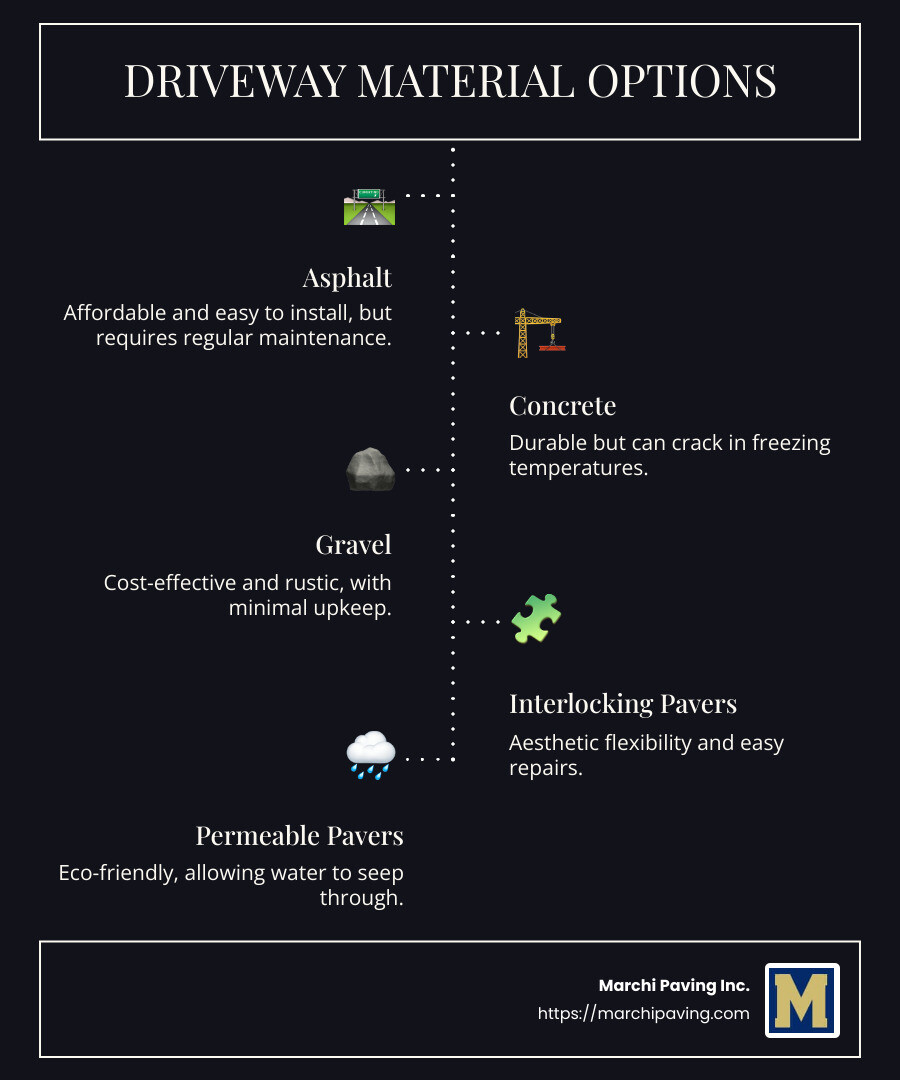
- Asphalt: Affordable and easy to install, but requires regular maintenance.
- Concrete: Durable but can crack in freezing temperatures.
- Gravel: Cost-effective and rustic, with minimal upkeep.
- Interlocking Pavers: Aesthetic flexibility and easy repairs.
- Permeable Pavers: Eco-friendly, allowing water to seep through.
Paving Options:
- Traditional Paving: Durable surfaces like asphalt and concrete.
- Permeable Paving: Reduces environmental impact, ideal for managing stormwater runoff.
- Customized Designs: Use of borders, banding, and different textures for a unique look.
The materials and method you choose not only affect the aesthetics and functionality of your space but also determine long-term costs and maintenance efforts required. Understanding these can help you make informed decisions, ensuring lasting satisfaction and value.
Simple guide to paving driveway terms:
– asphalt driveway paving companies
– cost of driveway paving
– paving contractors
Choosing the Right Driveway Material
When it comes to paving your driveway, selecting the right material is key. Each option has its own set of benefits and drawbacks, making it essential to choose based on your specific needs and preferences. Let’s break down the most common materials:
Gravel
Gravel is the go-to choice for those looking for a cost-effective and rustic solution. Gravel driveways are made up of loose stones that are spread and compacted to form a solid surface.
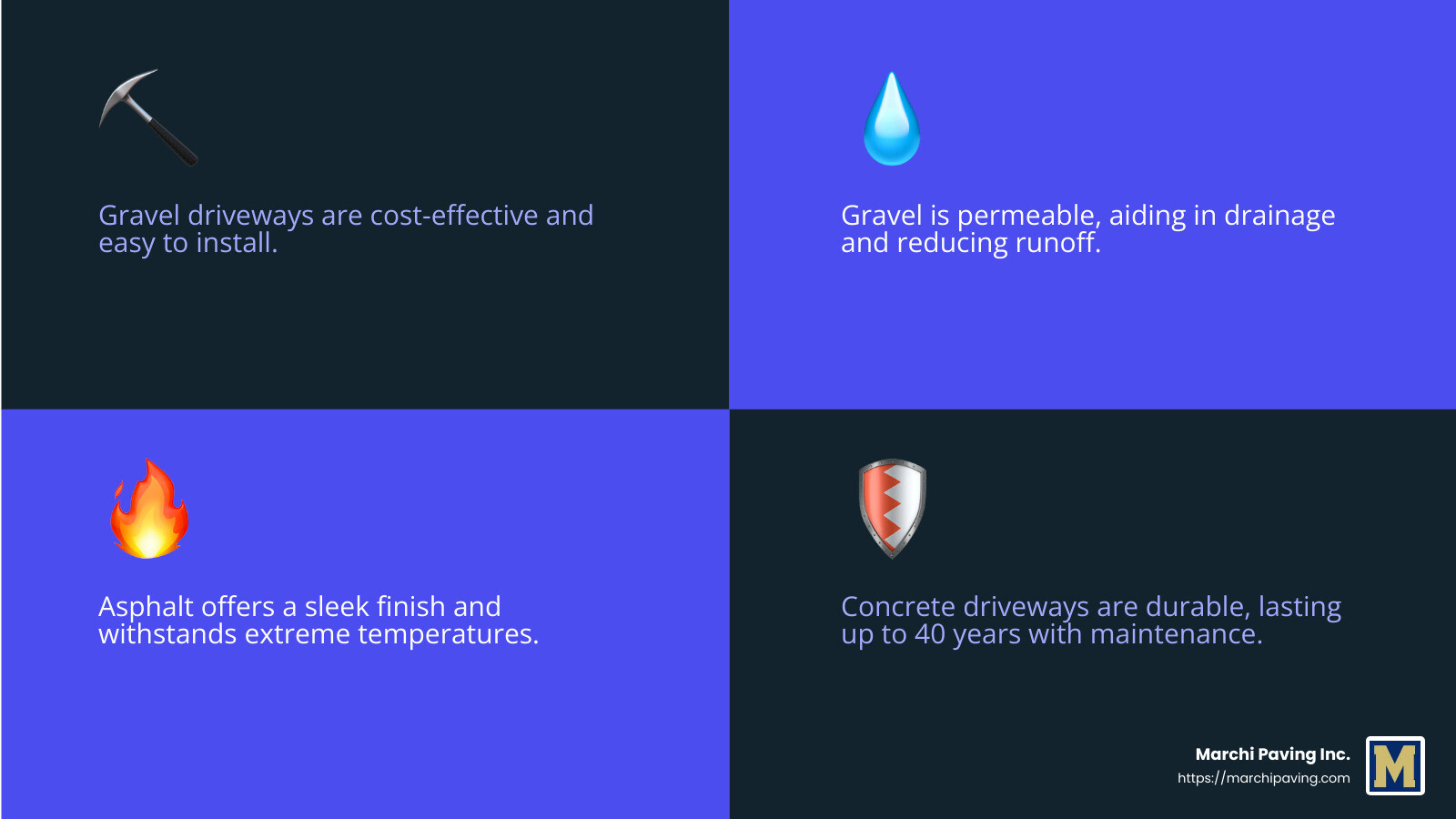
- Pros: It’s affordable and easy to install. Gravel is also permeable, which helps with drainage and reduces runoff.
- Cons: It may require regular maintenance to keep the surface even, especially after heavy rains or snow.
Asphalt
Asphalt is known for its smooth finish and sleek appearance, making it a popular choice for many homeowners.
- Pros: Asphalt is relatively affordable and quick to install. It performs well in extreme temperatures and can be easily repaired.
- Cons: It requires periodic sealcoating to protect against UV rays and water damage. The lifespan is typically around 15-20 years.
Concrete
Concrete driveways offer a durable and long-lasting option. They can be colored and stamped to mimic the appearance of natural stone.
- Pros: Concrete is strong and versatile. It lasts up to 40 years with proper maintenance.
- Cons: It can crack in regions with freeze-thaw cycles, and repairs can be more expensive compared to asphalt.
Brick Pavers
Brick pavers provide a classic and neat look that can add significant curb appeal to your property.
- Pros: They offer a timeless design and are available in a variety of colors. Brick pavers are also durable and can be easily repaired by replacing individual bricks.
- Cons: The initial cost can be higher than other materials, and they may require more maintenance to keep weeds from growing between the bricks.
Stone Pavers
Stone pavers are often used for their natural beauty and durability. They come in various sizes and shapes, allowing for creative designs.
- Pros: Stone pavers are incredibly durable and have an aesthetic appeal that improves property value. They are also resistant to cracking.
- Cons: They can be one of the more expensive options and may require professional installation for best results.
Choosing the right material for your driveway paving project involves balancing cost, maintenance, and aesthetics. Each material has its strengths and weaknesses, so consider your priorities and local climate conditions before making a decision.
Paving Driveway: Step-by-Step Process
Installation
Installing a driveway is a multi-step process that requires careful planning and execution. Here’s a quick rundown of what you can expect:
- Site Preparation: This involves clearing the area of any existing vegetation, debris, or old paving materials. Proper grading is crucial to ensure water drains away from the driveway, preventing future damage.
- Sub-Base Installation: A stable foundation is key. Typically, a layer of compacted gravel or crushed stone is laid down. This layer should be 4 to 8 inches deep, depending on soil type and expected traffic load. Compacting the sub-base prevents settling and provides a solid foundation for the surface layer.
- Surface Layer: Depending on your chosen material, the surface layer is applied next. For asphalt, it’s laid hot and smoothed out. Concrete is poured and leveled. Each material has specific requirements for curing, so follow your contractor’s advice for best results.
- Finishing Touches: Edging or borders are added to improve appearance and provide structural support. This is also the time to add any decorative elements, like stamped designs or colored finishes.
Maintenance
Keeping your driveway in top condition involves regular maintenance:
- Cleaning: Sweep away leaves and debris regularly. For stubborn stains, a power washer can help.
- Sealing: Sealcoating is essential for asphalt driveways. It protects against UV damage, oil spills, and water penetration. For asphalt, this should be done every 3-5 years, while concrete may require less frequent sealing.
- Weed Control: For paver and brick driveways, keep an eye out for weeds growing between the joints. Regularly remove them to maintain a neat appearance.
Sealcoating
Sealcoating is a vital process, especially for asphalt driveways. It involves applying a protective layer over the surface to extend its lifespan. This layer acts as a barrier against weather elements, oil, and chemical spills. Sealcoating not only improves the appearance by giving the driveway a fresh look but also prevents cracks and potholes from forming.
Repair
Even with the best maintenance, driveways can develop issues over time. Here’s how to address common problems:
- Cracks: Small cracks can be repaired using crack filler available at home improvement stores. For larger cracks, consider hiring a professional to ensure a lasting fix.
- Potholes: These require more extensive repair. The damaged area needs to be cleaned out, filled with new material, and compacted to match the surrounding surface.
- Resurfacing: If your driveway has widespread damage, resurfacing might be the best option. This involves applying a new layer over the existing surface, giving it a fresh start without the cost of a full replacement.
By following these steps and tips, you can ensure your driveway paving project is successful and long-lasting. Up next, we’ll dig into the cost considerations for driveway paving, helping you make informed financial decisions.
Cost Considerations for Driveway Paving
When planning your driveway paving project, understanding the costs involved is crucial. Let’s break it down into three key areas: cost comparison, long-term value, and maintenance costs.
Cost Comparison
Different materials come with varying price tags. Here’s a quick look:
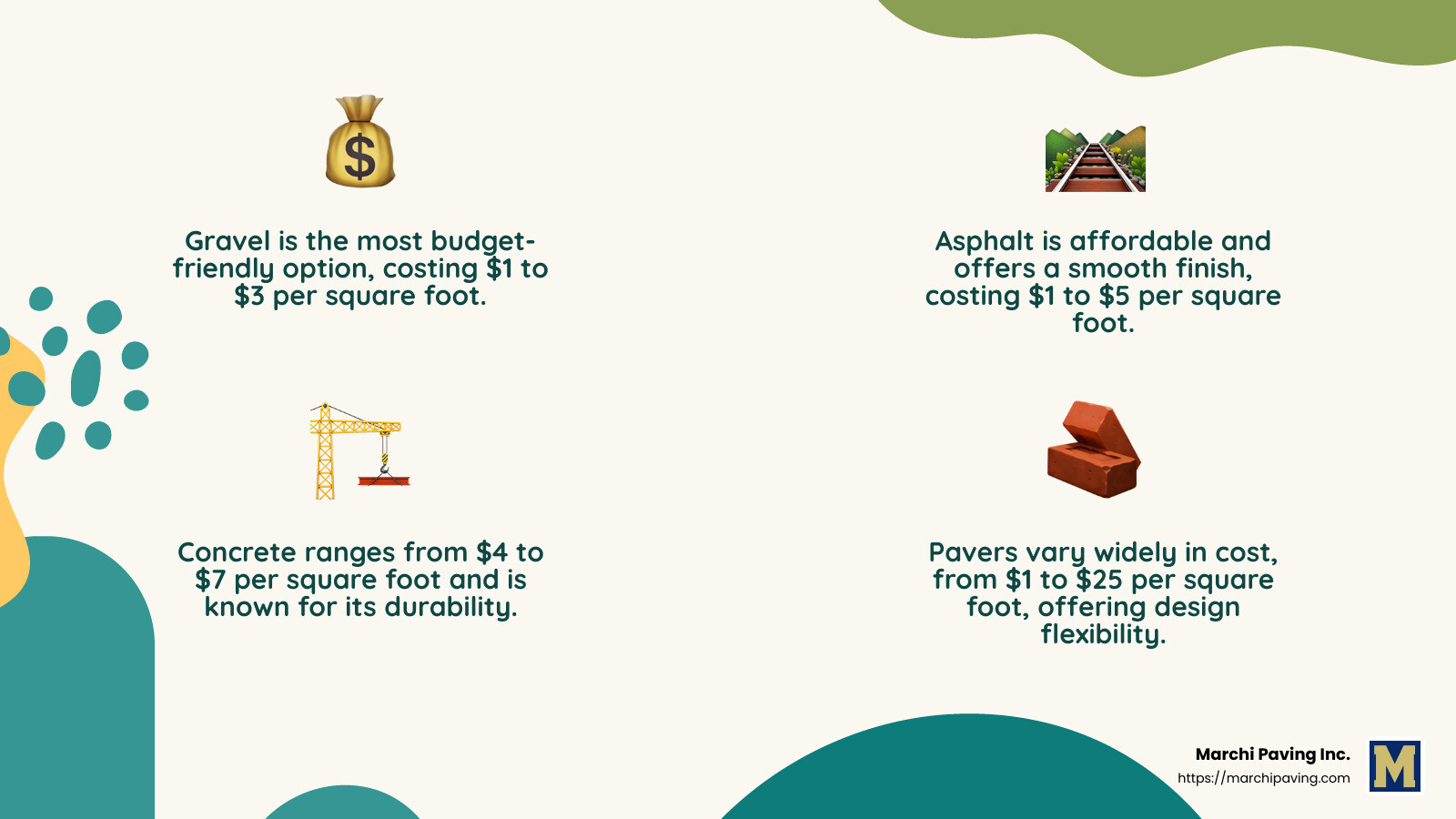
- Gravel: The most budget-friendly option, costing between $1 to $3 per square foot. It’s ideal for long, rural driveways but may not suit every aesthetic.
- Asphalt: A popular choice, costing $1 to $5 per square foot. It’s affordable and offers a smooth finish but requires regular maintenance.
- Concrete: More expensive than asphalt, ranging from $4 to $7 per square foot. It provides durability and a clean look, making it a favorite for urban settings.
- Pavers: These can vary widely in cost, from $1 to $25 per square foot, depending on the material (brick, stone). They offer the most design flexibility but come at a higher price.
Long-Term Value
Investing in a quality driveway material can save money in the long run. Here’s why:
- Durability: Concrete and pavers tend to last longer than other materials, making them a wise investment despite their higher initial cost. A well-maintained concrete driveway can last up to 40 years.
- Curb Appeal: A beautifully paved driveway improves curb appeal and can increase your home’s value by $5,000 to $7,000 on average. This is something to consider if you plan to sell your home in the future.
Maintenance Costs
Maintenance is an ongoing cost that varies by material:
- Asphalt: Requires sealcoating every 3-5 years to prevent cracks and potholes, which can add to the overall cost over time.
- Concrete: Generally low maintenance but may need occasional sealing and crack repairs.
- Pavers: Require weed control and periodic leveling. However, individual pavers can be replaced easily if damaged, saving on repair costs.
By considering these factors, you can choose a driveway paving option that fits your budget and meets your long-term needs. Next, let’s explore eco-friendly and permeable paving options that not only save money but also benefit the environment.
Eco-Friendly and Permeable Paving Options
Let’s explore eco-friendly paving. These options not only make your driveway look great but also help the environment. Here’s how:
Permeable Pavers
Permeable pavers are a top choice for those who care about the planet. They allow rainwater to seep through gaps between the stones, recharging the groundwater and reducing runoff. This helps prevent puddles and flooding in your yard.
Benefits:
- Stormwater Management: By letting water pass through, permeable pavers reduce the risk of flooding and erosion.
- Pollution Control: They help filter pollutants from rainwater before it reaches streams and rivers.
- Durability: Made from materials like concrete and clay, they are strong and long-lasting.
Green Driveways
A green driveway is not just about color. It’s about using materials that support plant growth. This type of driveway combines solid surfaces with spaces for grass or plants. Imagine a driveway that looks like a lush garden!
Options Include:
- Grass Pavers: These are grids filled with soil and grass, offering a natural look.
- Porous Concrete: Similar to regular concrete but with larger gaps to allow water through.
Stormwater Management
Proper stormwater management is essential for any driveway. With eco-friendly options, you can control where rainwater goes.
Techniques:
- Gravel Borders: Installing gravel along the edges helps direct water away from your home.
- Sloped Design: Ensuring your driveway slopes correctly can guide water to desired drainage areas.
By choosing eco-friendly and permeable paving driveway options, you not only create a beautiful entrance to your home but also contribute positively to the environment. Up next, let’s tackle some of the most frequently asked questions about paving driveways.
Frequently Asked Questions about Paving Driveway
What is the cheapest option for paving a driveway?
When it comes to budget-friendly options, gravel is often the go-to choice. Gravel driveways are simple to install and require minimal materials. The cost can range from $1 to $3 per square foot, making it the most affordable option for many homeowners. While gravel is easy on the wallet, it requires periodic maintenance, such as grading and replenishing, to keep the surface even.
Another relatively inexpensive option is brick. Though not as cheap as gravel, bricks can be cost-effective if you find reclaimed or recycled bricks. They offer a rustic charm and can be laid in various patterns to improve curb appeal.
Is a paver driveway cheaper than concrete?
Paver driveways can sometimes be more affordable than concrete, depending on the type of pavers you choose. Basic pavers might cost around $10 to $25 per square foot, while concrete ranges from $4 to $7 per square foot. However, the initial cost isn’t the whole story. Pavers often offer better long-term value due to their durability and ease of repair. If a paver cracks, you can replace just that piece—unlike concrete, which may require more extensive repairs.
What type of paving is best for a driveway?
Choosing the best type of paving depends on your needs and style preferences. Here are some popular options:
- Cobblestones: Known for their old-world charm, cobblestones are highly durable and ideal for creating a classic look. They are more expensive upfront but offer excellent longevity.
- Crazy Paving: This style uses irregularly shaped stones to create a unique, mosaic-like pattern. It’s perfect for those who want a one-of-a-kind driveway and can be a conversation starter.
- Filetti: These are long, thin stones that create a sleek, modern appearance. Filetti stones are durable and provide a distinct European flair to any driveway.
Each option has its pros and cons, so consider factors like climate, traffic, and personal taste when deciding on the best paving driveway material for your home.
Conclusion
At Marchi Paving Inc., we understand that choosing the right driveway paving option is more than just a decision—it’s an investment in your home. With over 20 years of experience, we specialize in delivering durable, aesthetically pleasing, and low-maintenance driveways that stand the test of time.
Durability is at the forefront of what we offer. Our asphalt driveways, when paired with regular maintenance like sealcoating and crack filling, can last up to 20 years. This longevity not only saves you money in the long run but also ensures that your driveway remains in top condition, enhancing your property’s curb appeal.
When it comes to aesthetics, we provide a variety of options to suit any style. From the rustic charm of cobblestones to the sleek look of filetti, our range of materials ensures that your driveway will complement your home beautifully. Our skilled team uses advanced equipment to execute projects with precision, ensuring that every driveway we pave is a work of art.
Maintenance is key to keeping your driveway looking fresh and new. Regular upkeep not only prolongs the lifespan of your driveway but also improves its safety and appearance. Our team at Marchi Paving Inc. is committed to providing high-quality maintenance services, ensuring that your investment remains protected.
If you’re ready to transform your driveway with a durable, beautiful, and low-maintenance solution, contact us today to get started. At Marchi Paving Inc., we’re here to help you make the best choice for your home.

