

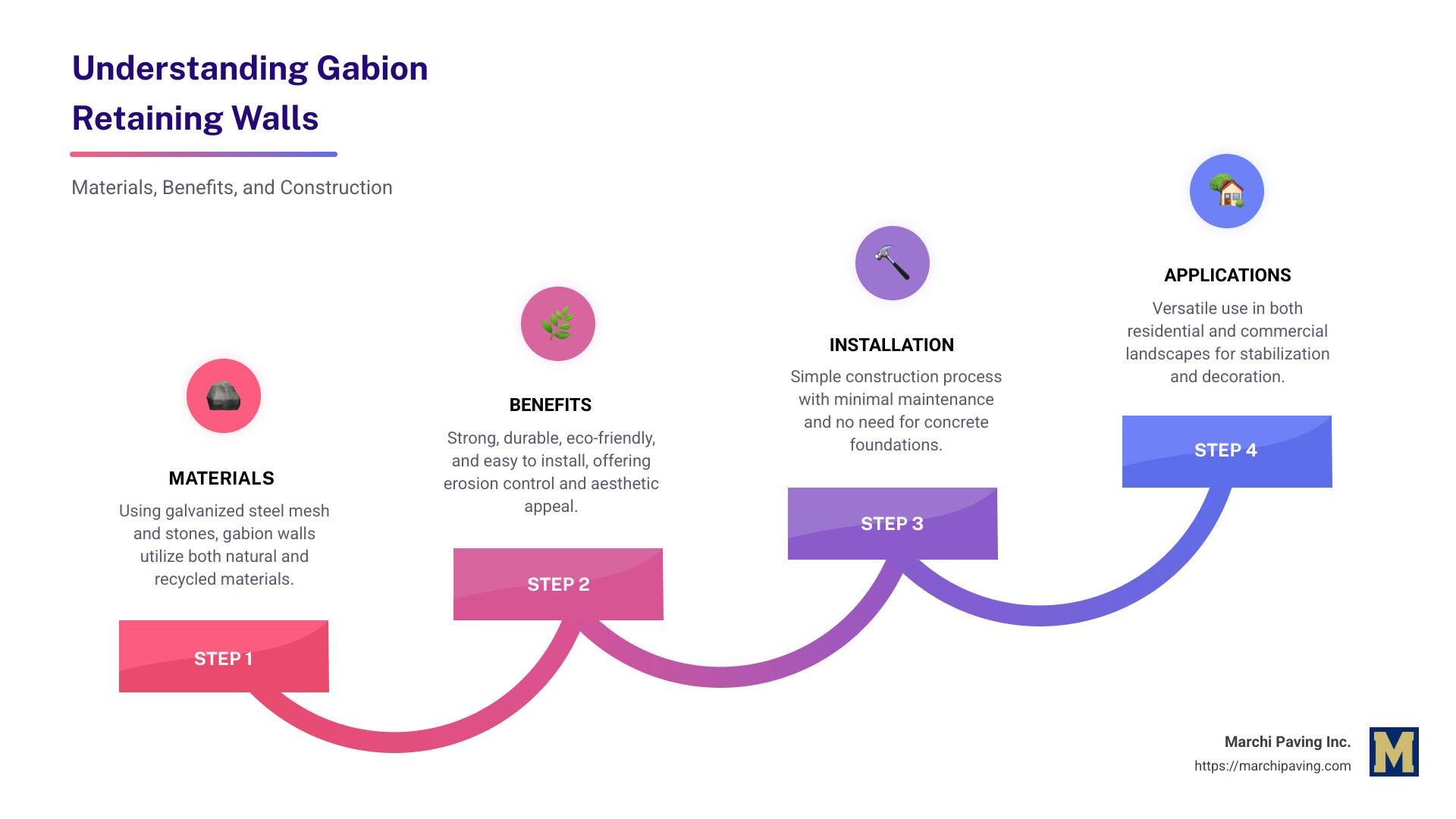
Gabion retaining wall is a popular solution for both residential and commercial properties seeking a combination of strength, style, and sustainability. These structures are composed of wire mesh cages filled with stone or other materials. They offer an eco-friendly method to prevent soil erosion, stabilize landscapes, and add aesthetic appeal.
- Definition: Gabion retaining wall consists of wire boxes filled with rocks, designed to stabilize soil and prevent erosion.
- Benefits:
- Strong and durable, adapting to landscape movement.
- Easy to install and require minimal maintenance.
- Environmentally friendly by using natural and recycled materials.
- Materials: Typically include galvanized steel mesh and stones, although other fill materials like concrete or recycled materials may also be used.
Historically, the concept of gabions dates back to ancient times, with early versions used in military fortifications. Over the years, their role has expanded into civil engineering and landscaping due to their versatility and reliability. Today, gabions continue to serve as both functional and stylish elements in construction projects worldwide.
By utilizing local materials and straightforward construction techniques, gabion walls offer an effective solution for various architectural needs, from erosion control to landscape design.
Terms related to gabion retaining wall:
– boulder retaining wall
– concrete retaining wall
– retaining wall ideas
What is a Gabion Retaining Wall?
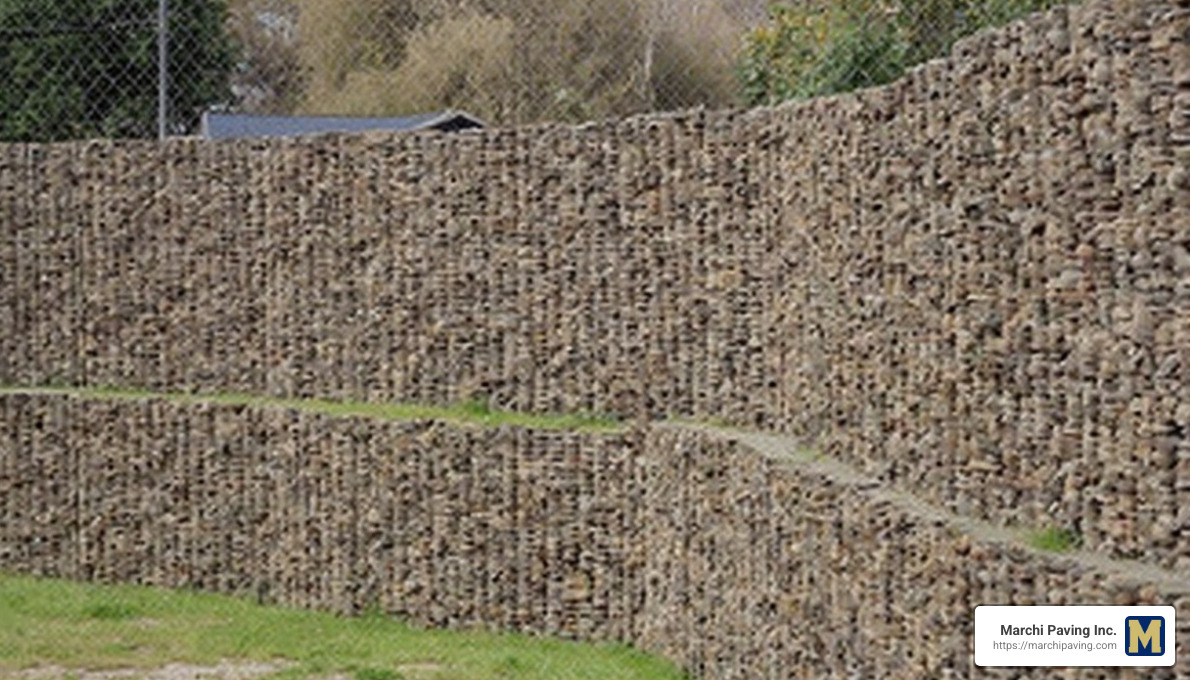
A gabion retaining wall is a structure made of wire mesh cages filled with stones or other materials. These walls are primarily used to manage soil erosion and provide support for landscapes. They are a blend of functionality and design, offering a sustainable way to stabilize land.
Components of a Gabion Retaining Wall
1. Steel Mesh:
The backbone of a gabion wall is its steel mesh. This mesh is typically made from galvanized steel, which provides durability and resistance to rust. The mesh forms the cage that holds the fill materials in place.
2. Fill Materials:
Gabion walls are filled with stones, which are often sourced locally. Common materials include basalt, granite, and limestone, chosen for their weight and durability. The rocks should have a specific gravity of at least 2.5 to ensure stability. Some gabions may also use recycled materials like broken concrete.
3. Geotextile Fabric:
To improve stability and prevent soil from seeping through, a layer of geotextile fabric is often placed between the soil and the gabion wall. This fabric allows water to pass while keeping soil particles out, maintaining the wall’s integrity.
Types of Gabion Walls
1. Retaining Walls:
These are the most common type of gabion walls, used to hold back soil and prevent erosion. They are ideal for sloped landscapes and can be constructed up to 30 feet high, although they are most effective at heights of 18 feet or less.
2. Free-Standing Walls:
Unlike retaining walls, free-standing gabion walls do not hold back soil. Instead, they are used as barriers or fences. These walls can add a rustic charm to gardens and outdoor spaces, offering both functionality and aesthetics.
3. Decorative Walls:
Gabion walls can also serve purely decorative purposes. By using different types of stones or even colored materials, they can create striking visual features in landscapes. Their versatility allows for creative designs that improve the beauty of any outdoor space.
Historically, gabions have been used since ancient times for military purposes, providing protection and fortification. Over the centuries, their use has expanded into civil engineering and landscaping, thanks to their robustness and adaptability. Today, gabion walls are appreciated for their eco-friendly nature and ability to blend seamlessly into natural environments.
Benefits of Gabion Retaining Walls
Erosion Control
Gabion retaining walls are masters at combatting erosion. By using the natural strength of stones and the stability of steel mesh, these walls effectively manage both wind and water flow. This makes them an excellent choice for landscape protection. In areas prone to soil erosion, like some neighborhoods in Houston, gabion walls offer a robust solution that not only stabilizes the soil but also adds to the landscape’s visual appeal.
Easy Installation
One of the standout features of gabion walls is their simple construction. Unlike traditional retaining walls, they don’t require concrete foundations, which can be costly and time-consuming to install. Instead, you can place gabion cages directly on a graded soil foundation. This makes them a fantastic option for DIY enthusiasts looking to tackle a project on their own. With easy-to-assemble kits available, building a gabion wall can be a straightforward weekend project.
Affordability
Gabion walls are known for their cost-effectiveness. They use low-cost materials like locally sourced stones, which can significantly reduce expenses. Additionally, the potential for DIY installation means you can save on labor costs. While professional installation is always an option, the simplicity of gabion walls makes them accessible for those looking to cut costs without sacrificing quality.
Eco-Friendliness
If sustainability is a priority, gabion walls are an excellent choice. They often incorporate recycled materials, such as broken concrete, which reduces waste and promotes resource conservation. By using local materials, you can further minimize the environmental impact associated with transportation. This eco-friendly approach makes gabion walls a smart choice for environmentally conscious homeowners.
Permeability
Gabion walls excel in permeability, allowing both water and wind flow. This natural drainage capability prevents water buildup behind the wall, reducing pressure and the risk of structural damage. The permeability of gabion walls also means they can support healthy plant growth, contributing to a vibrant and dynamic landscape.
Longevity
Durability is a key advantage of gabion walls. Made from rust-resistant galvanized steel, these walls are built to withstand the test of time. Whether facing harsh weather conditions or heavy loads, gabion walls maintain their integrity, offering a long-lasting solution for retaining and decorative purposes.
Aesthetics
Beyond their functional benefits, gabion walls offer significant aesthetic appeal. Their modern design can improve any landscape, providing a sleek and natural look. With the option to use customizable fill materials, such as colorful stones or even glass, you can create a unique visual statement that reflects your personal style. Gabion walls not only serve a practical purpose but also lift the beauty of outdoor spaces, making them a popular choice for both residential and commercial projects.
Design and Construction Tips for Gabion Retaining Walls
Building a gabion retaining wall involves careful planning and execution to ensure stability, durability, and aesthetic appeal. Here’s a guide to help you design, construct, and maintain these versatile structures.
Design Considerations
Site Conditions: Before starting, assess the site conditions. Check for slope stability, drainage patterns, and potential erosion areas. This helps in determining the wall’s height, length, and placement.
Soil Types: Understanding the soil type is crucial. Gabion walls are ideal for soils with a minimum bearing capacity of 100 KPa. Remove any soft, loose, or organic material and replace it with compacted granular fill to ensure stability.
Load Calculations: Consider any additional loads the wall might support, such as from driveways or structures. If there are extra surcharges, increase the thickness of the gabions to handle the higher expected loads.
Construction Steps
Foundation Preparation: Start with a solid foundation. Excavate to a level that accommodates the gabion baskets and place a layer of compacted gravel to aid drainage and stability.
Cage Assembly: Assemble gabion cages using galvanized steel mesh to prevent rust. Ensure the cages are tightly secured and aligned properly.
Filling Techniques: Use locally sourced stones to fill the cages. The stones should be angular and fit snugly to minimize movement. For added stability, fill the cages layer by layer and compact each layer.
Maintenance
Drainage Inspection: Regularly check the drainage system to prevent water buildup, which can cause pressure and damage. This involves inspecting the geotextile fabric and ensuring water flows freely.
Annual Checks: Conduct annual inspections to identify any signs of wear, rust, or displacement. Addressing minor issues early can prevent major repairs later.
Repair Tips: If the wire mesh shows signs of rust or wear, replace affected sections promptly. For displaced stones, refill and compact as necessary to maintain the wall’s integrity.
By following these design and construction tips, you can create a gabion retaining wall that is not only functional but also improves the beauty of your landscape. Next, let’s explore some common issues that might arise with gabion walls and how to address them effectively.
Common Issues and Solutions
While gabion retaining walls offer many benefits, they come with their own set of challenges. Understanding these issues can help in planning and maintaining these structures effectively.
Disadvantages of Gabion Retaining Walls
One of the notable drawbacks is their low habitat value. Unlike natural stone walls, gabions don’t provide much shelter for wildlife. This can be a consideration if you’re aiming to support local biodiversity in your landscape design.
Additionally, gabion walls can sometimes have a higher cost than some alternatives, like simple wooden or concrete barriers. While the materials themselves might be affordable, the cost can rise due to the labor involved in filling and assembling the cages.
Wear and Tear
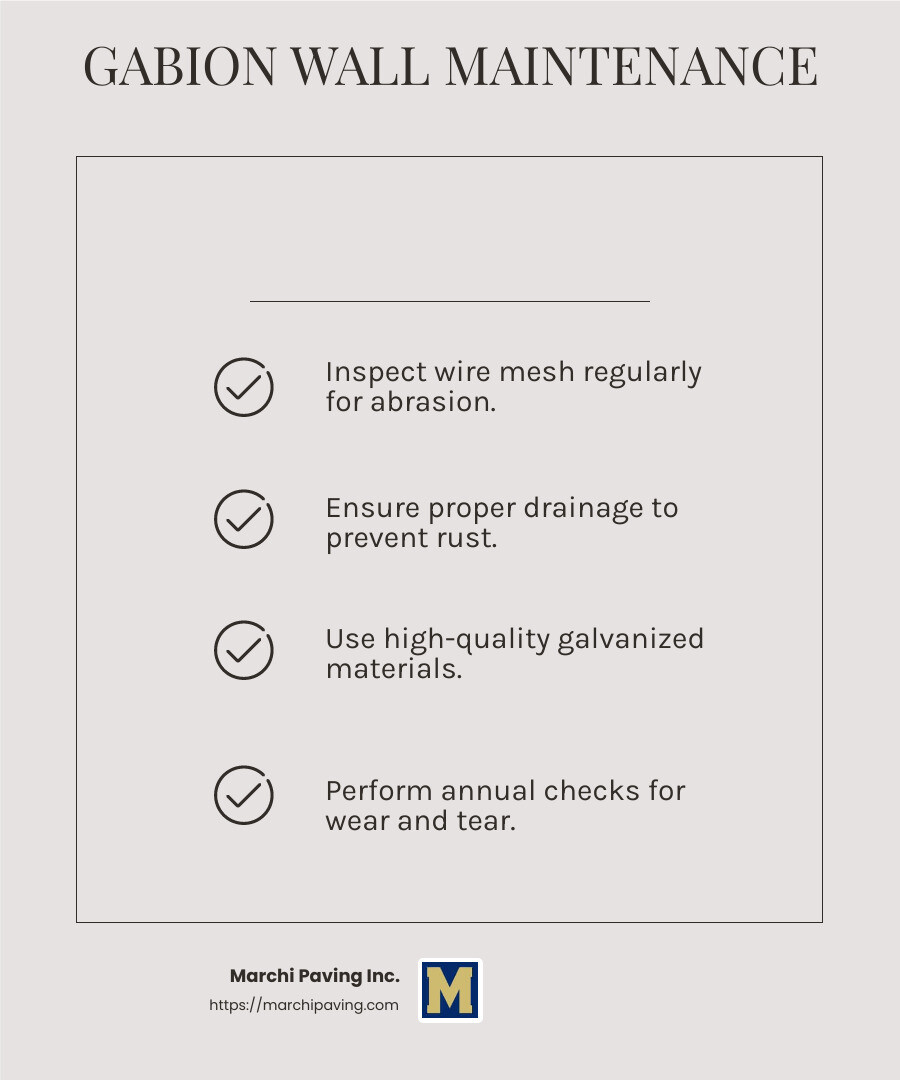
Over time, the wire mesh of gabion walls can suffer from wire abrasion. This wear is typically due to the movement of stones inside the cages. Regular inspections can help catch this early, allowing for timely repairs.
Rust prevention is another key concern. Although most gabion cages are made from galvanized steel to resist rust, exposure to harsh weather conditions can still lead to corrosion over time. Using high-quality galvanized materials and ensuring proper drainage can mitigate this risk.
Installation Challenges
Building a gabion wall requires some equipment needs and manual labor. The process involves assembling the cages, filling them with stones, and ensuring they are stable and aligned. This can be labor-intensive, especially for larger projects.
For those opting to DIY, it’s crucial to have the right tools and a solid understanding of the process. However, hiring professionals can alleviate these challenges, ensuring the wall is built correctly and efficiently.
By being aware of these common issues and their solutions, you can better prepare for the challenges of installing and maintaining a gabion retaining wall. This proactive approach helps ensure your wall remains a durable and attractive feature in your landscape.
Next, we’ll address some frequently asked questions about gabion retaining walls to further clarify any doubts you might have.
Frequently Asked Questions about Gabion Retaining Walls
What is the disadvantage of gabions?
While gabion retaining walls offer many advantages, they do have some downsides. One key disadvantage is their low habitat value. Unlike natural stone or wood walls, gabions don’t provide much shelter for wildlife. If supporting local biodiversity is a goal, this might be a concern.
Another potential drawback is the higher cost compared to some alternatives. While the materials—like galvanized steel and stones—can be affordable, labor costs may increase the overall expense, especially for large projects. Filling and assembling the cages is labor-intensive and can add to the cost.
Are gabions cheaper than a retaining wall?
The cost of gabions compared to traditional retaining walls can vary. Generally, gabions can be more affordable in terms of materials, especially if you have access to local stones or recycled materials. However, the labor involved in assembling and filling the cages might make them more expensive than simpler options like poured concrete or wooden barriers.
For DIY enthusiasts, gabions offer a chance to save on labor costs, but this requires time and effort. Hiring professionals can ensure proper installation, but it might increase the total expense. It’s essential to weigh these factors based on your specific project needs.
Are gabion retaining walls expensive?
Gabion retaining walls can be cost-effective, but the price depends on several factors. The materials—like the galvanized steel mesh and stones—are generally affordable. However, the overall cost can rise due to the labor needed for installation.
Compared to other types of retaining walls, like those made from natural stone or concrete, gabions might be less expensive if you have access to suitable fill materials. Additionally, their longevity and low maintenance needs can make them a good investment over time.
When planning a gabion wall, consider both the initial costs and the long-term benefits, such as durability and minimal upkeep. By doing so, you can decide if a gabion wall is the right choice for your landscape project.
In the next section, we will explore the design and construction tips for building effective and attractive gabion retaining walls.
Conclusion
In summary, gabion retaining walls are a fantastic choice for those seeking a blend of strength, style, and sustainability. These walls not only offer excellent erosion control and permeability but also provide a modern aesthetic that can be customized with various fill materials. Their durability and eco-friendliness make them a long-term investment that can withstand the test of time.
At Marchi Paving Inc., we bring over 20 years of experience in hardscaping services, including the installation of gabion retaining walls. Our team is dedicated to delivering high-quality, in-house project execution, ensuring your project is completed efficiently and to the highest standards. We serve a wide range of locations across Massachusetts, including Chelmsford, Cambridge, and Newton, among others.
If you’re considering a gabion retaining wall for your next project, we’re here to help. Our experts can provide guidance on design considerations, construction steps, and maintenance tips to make sure your wall not only meets but exceeds your expectations.
To learn more about our services or to get started on your gabion wall project, visit our hardscaping services page. We look forward to helping you create a strong, stylish, and sustainable landscape solution.

